
Part 1 of 3: Analysis of Excellent New Article on Mississippi River’s Effect on Mississippi Sound
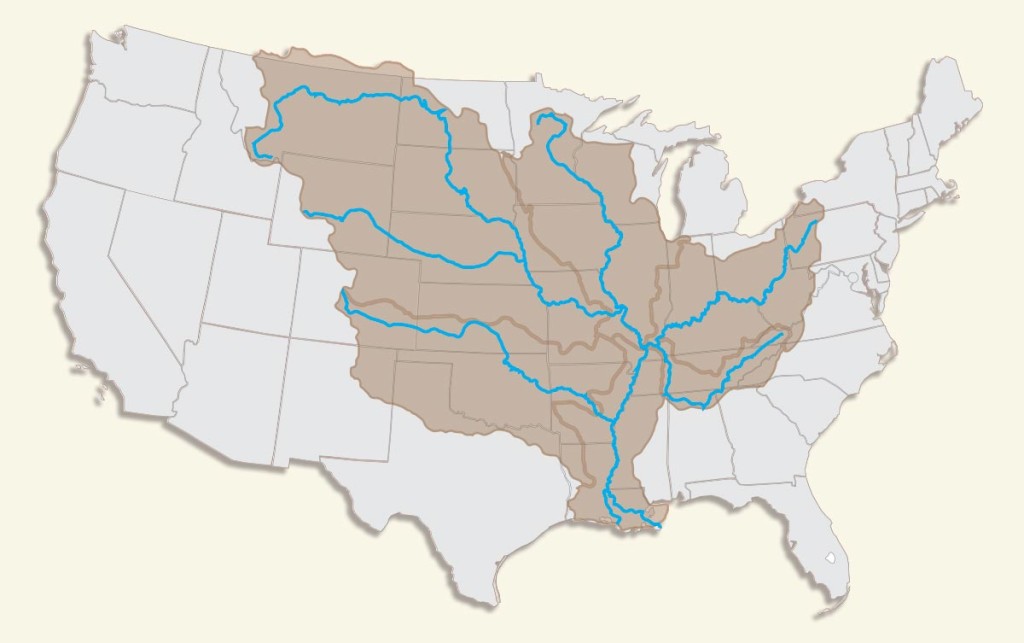
INTRODUCTION: The Times-Picayune and Nola.com in New Orleans published a compelling article on November 26, 2025 by Mike Smith, their acclaimed environmental reporter, entitled: Mississippi River spillways have kept Louisiana dry and safe. That may no longer be enough about the Mississippi River’s effects on the Mississippi Sound. The article was built after months of research, including countless interviews across the region and attending the Mississippi Sound Coalition’s October public meeting in Gulfport. Smith’s story expertly explores the real harms to Mississippi’s coastal ecosystem, fisheries and economy, and the balancing act of finding solutions to protect Louisiana from flooding while also protecting the Mississippi Sound.
We encourage readers to take the time to read the full article. However, the article itself (linked here) requires a subscription to Nola.com, and we know not everyone has a subscription. The Coalition believes this article is so important and well-done, that we’ve written our own analysis in the form of a three-part series starting today. We introduce Part 1 of 3 below which links to both the full original article on Nola.com and the full text of our Part 1 analysis on the Coalition’s blog.
Part 1 of 3: Coalition Transforms Regional Ecological Concerns Into Federal Engagement
The Times-Picayune/Nola.com’s Nov. 26, 2025 article, Mississippi River spillways have kept Louisiana dry and safe. That may no longer be enough, credits the Mississippi Sound Coalition for its role in bringing national attention to the harm and looming risk that large-scale Bonnet Carré Spillway releases of Mississippi River Water pose to the Mississippi Sound Estuary and the Coast economy and likewise to Louisiana and Alabama estuaries and economies.
The article quotes Coalition Manager and General Counsel Gerald Blessey: “This is a national problem, and it calls for a national solution,” said Gerald Blessey, the former mayor of Biloxi now helping lead a coalition seeking to draw greater attention to the issue.”
Through months of research, including countless interviews across the region and attending the Mississippi Sound Coalition’s October public meeting in Gulfport, Smith learned firsthand how the Coalition’s efforts have elevated local concerns into a national conversation.
In his story, he makes clear the group’s commitment to stay in the fight until meaningful reforms are made to control polluted Mississippi River water and flooding.
Smith wrote, “The organization leading the charge on the issue, the Mississippi Sound Coalition, has signaled its fight will continue. At a recent meeting in Gulfport, Mississippi, Gulf Coast leaders spoke of their ongoing strategy to engage politicians and the public on the problem. The Coalition has changed the narrative from a Mississippi Gulf Coast matter to ‘a national infrastructure problem affecting multiple states,’ which is a major strategic win.”
In writing of meaningful ways in which to bring the issue to the forefront at a national level, Smith talks about the Lower Mississippi River Comprehensive Management Study (LMRCMS) that was being conducted by the U.S. Army Corps of Engineers until it was paused due to cuts in government funding this past June.
“The Corps of Engineers had been engaged in a sweeping, five-year, $25 million “mega-study” on the future of managing the lower river. The issues are so multi-layered and complex that the plan was to have the “mega-study” open the door to other related inquiries — or ‘tiered studies’ — to delve even deeper.”
(Note: The Mississippi Sound Coalition initiated the study. In 2020, our Coalition leaders requested that Senators Wicker and Hyde Smith amend the Water Resources Development Act of 2020 to require the LMRCMS study to be conducted, and again by working with our Senators in 2022, to provide 100% federal funding for the Corps’ $25 Million five-year study, which finally began in 2023. The law establishing the study named the Coalition as a key stakeholder and required the Corps to study the impact of the Corps’ management of Mississippi River water released into all the estuaries of Louisiana and Mississippi. The Coalition is currently pushing for the study to be re-started and is gaining momentum with resolutions being passed by City Councils and other entities across the Coast.)
To illustrate the true economic impact on the Coast economy, Smith interviewed economic victims on the front lines in Mississippi’s economy, including the seafood and tourism industries. He recounted a discussion with David Gautier, who runs a seafood business in Pass Christian, Mississippi.
“Gautier went years without oysters and only recently began to emerge from that hit to his business. The reason? They were killed off in 2019, the result of high Mississippi River water diverted through the Bonnet Carre Spillway near New Orleans.”
Smith points out the amount of freshwater and nutrient pollution that inundated the Mississippi Sound back in 2019 and stated that the dilemma is only expected to worsen in the decades to come “due to projections showing more extreme weather, and its implications range far beyond the Mississippi Coast.”
In another excerpt regarding the impact on the Mississippi Coast economy, specifically tourism, Smith writes:
“The Bonnet Carré opening affecting tourism certainly wasn’t a discussion as part of the initial flood management planning 100 years ago, but at a recent Coalition meeting, the numbers were shared.”
“’Coast tourism tax revenue represents over 30% of the total tourism tax revenue of the entire state,’ said Linda Hornsby, executive director of the Mississippi Hotel and Lodging Association, which joined Harrison County and others in a lawsuit against the Corps of Engineers. ‘We can’t afford it. We’ve got to make sure it doesn’t happen again.’”
NOTE: The Sound Coalition has written and proposed a comprehensive new law called the NORTHERN GULF ESTUARY PROTECTION ACT which, if passed, would finally require the U.S. Army Corps of Engineers not only to protect New Orleans and all other areas from flooding, but also avoid or at least minimize the negative impacts of polluted Mississippi River on the estuaries of the northern Gulf from eastern Louisiana through the Mississippi Sound and all the way to Mobile Bay.
Additionally, the Coalition is requesting a Congressional committee field hearing on the Mississippi Coast to hear from scientists, fishermen, tourism businesses, and others from Louisiana, Mississippi, and Alabama about win-win solutions for managing the Mississippi River to protect life and property from flooding AND avoid harm to the affected ecosystems.
TO COME: Parts 2 and 3 later this week.
Part 2: Sound Coalition Builds Regional Unity Using Diplomacy, Science and the Courtroom
Part 3: Coalition’s Advocacy Has Shifted Attitudes and Elevated Awareness
If you are not already on the Mississippi Sound Coalition email list, you can sign up here.
Follow Mississippi Sound Coalition on Social Media
Facebook: Facebook.com/SaveOurSoundMiss
X (formerly Twitter): Twitter.com/SaveOurSoundMS
Instagram: Instagram.com/SaveOurSoundMS
LinkedIn: LinkedIn.com/Company/Save-Our-Sound-MS
TikTok: Tiktok.com/@saveoursoundms
YouTube: Youtube.com/@SaveOurSoundMS