
“A DISASTER OF BIBLICAL PROPORTIONS"
Acclaimed Times Picayune Reporter Shares Coalition’s “Tipping Points” Studies
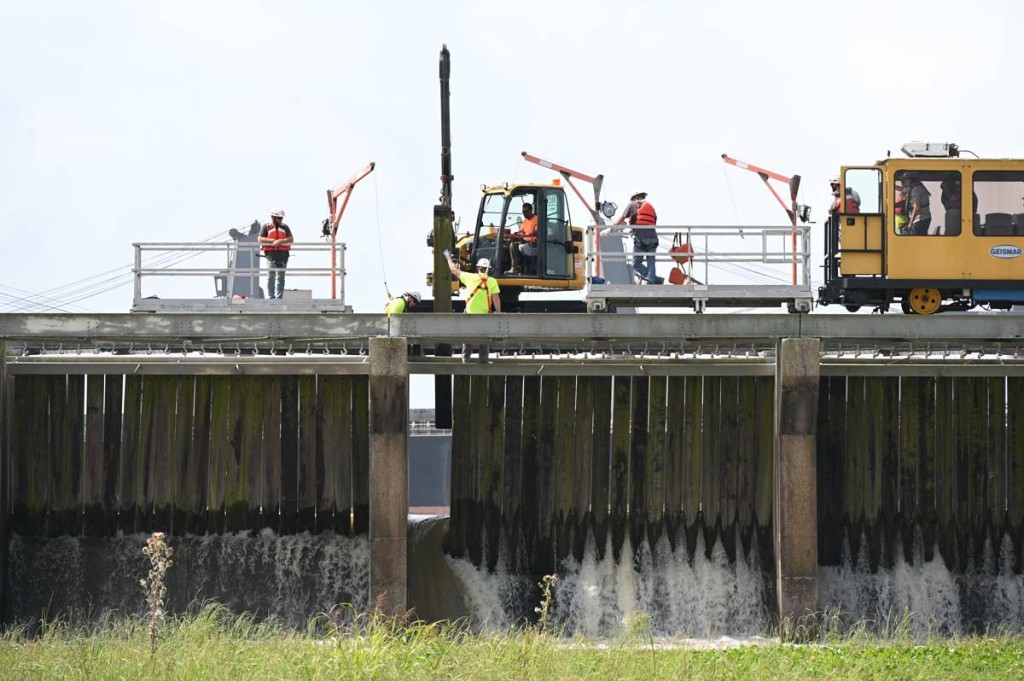
INTRODUCTION: The Times-Picayune/The New Orleans Advocate and Nola.com published a new article this week by Mike Smith, their acclaimed environmental editor/reporter, entitled: “This Mississippi River spillway protects New Orleans from flooding. But is there a better way?” Smith wrote the article after attending a presentation by the Sound Coalition of new scientific studies released last week. (Our full story about those studies is Linked Here).
We encourage readers to read the full article on Nola.com. However, the article itself (Linked Here) requires a subscription to Nola.com, and we know not everyone has a subscription. Because this article is so important and well-done, we’ve written our own analysis.
The article raises urgent and far-reaching concerns about the looming threats of the Mississippi River and the Bonnet Carré Spillway to New Orleans, the Mississippi Sound and the entire northern Gulf. It puts a spotlight on the question that can no longer be ignored:
“Is there a better way to operate the Bonnet Carré Spillway?”
The article points out that the studies outline a path forward, identifying clear limits on how much water should be released, and for how long, to protect the Mississippi Sound while still maintaining flood protection.
Smith says that after nearly a century of protecting New Orleans from flooding, changing conditions and environmental damage, the new studies warn that the current river control system is under increasing strain, and in a worst-case scenario, the Mississippi River could break through control structures and permanently change course into the Atchafalaya Basin.
The Mississippi Sound Coalition’s Gerald Blessey described that possibility as, “A disaster of Biblical proportions for the United States and the world.”
The article highlights what Mississippi Gulf Coast communities have already been experiencing for years. More frequent and longer spillway openings, especially the record-setting events in 2019:
- Destroyed oyster reefs, degraded all other seafood and marine life, and killed more than 10% of the dolphins
- Fueled harmful algal blooms and closed beaches
- Severely damaged tourism and local economies
“We’re still dying a slow death—death by 1,000 cuts,” Blessey said, calling for a major shift in how the lower Mississippi River is managed.
The studies, conducted by the Northern Gulf Institute and University of Southern Mississippi scientists, conclude that duration, volume, and opening pace are the key drivers of ecological harm to our waters, and that these factors can be managed by the U.S. Army Corps of Engineers to reduce impacts.
Smith interviewed Mark Davis, of the Tulane Institute on Water Resources, Law and Policy, who said it was overdue for management of the lower river to be reconsidered, and that the recommendations from Mississippi communities seem “credibly developed.”
As the article states, “The Mississippi drains more than 40% of the contiguous United States, and the water must go somewhere. Any change in one location has ripple effects.”
Smith goes on to explore solutions such as potential greater flexibility on how much water is sent through the Old River Control structures near Angola, which ‘in turn has the potential to impact the duration and frequency of Bonnet Carre Spillway operations.’”
In the article, Dr. Paul Mickle, co-director of the Northern Gulf Institute states:
“If they operate the Bonnet Carré Spillway…for three weeks at a time, we actually get win-wins. We protect New Orleans, we protect our oysters, and our marine resources are protected for generations to come.”
Tulane’s Mark Davis offered at the end of the article, “We’re always one event away from nature forcing our hand. But I can tell you this: When that moment comes, it’s better to have thought through your options than to start thinking in the moment,” he said. “If there’s one lesson that Mississippi is showing that they’ve learned, it is don’t wait for the crisis, and don’t even wait for the next opportunity. Prepare for it.”
The full article is worth the read on NOLA.com (subscription required):
https://www.nola.com/news/environment/mississippi-river-bonnet-carre-new-orleans-louisiana-mississippi-gulf-coast-flooding/article_487eb6b6-798d-460f-9845-a25e9c9f962c.html.
(READ THE SOUND COALITION’S PREVIOUS STORY WITH LINKS TO THE TWO NEW STUDIES HERE.)